

After two years of collaboration between London South Bank University (LSBU), the University of Economics Ho Chi Minh City (UEH) and the Southern Institute of Water Resources Research (SIWRR), the Empowering Change project has reached the completion of its funded programme.
The critical question
The project set out to strengthen the knowledge, skills and capacity of female academics in Vietnam to lead action on climate change and sustainable development. Its first two phases – from developing an evidence-based interdisciplinary curriculum to delivering an eight-week programme for 35 female academics, fieldwork and industry engagement – were highlighted in our previous South Bank Innovation story.
With those foundations in place, the final phase focused on a critical question: what lasting difference did the project make?
Building an evidence base for change
The final phase moved the project from intervention to evidence, examining how the programme influenced participants’ knowledge, skills, professional practices and engagement with sustainability.
Using a mixed-method research approach, including pre- and post-programme surveys, interviews and participant observation, the project generated quantitative and qualitative evidence of change. Findings indicate increased knowledge and awareness of climate change and sustainable development, alongside greater confidence among participants in integrating sustainability into their professional activities.
Importantly, the impact extended beyond knowledge acquisition. Participants demonstrated stronger capabilities in interdisciplinary working, qualitative research, communication and community engagement, as well as an increased ability to translate research into practical action.
By completing the substantive data collection and evaluation, the project has created an evidence base not only for assessing its own impact, but also for informing future approaches to interdisciplinary sustainability education and capacity building.
Turning project learning into international research
The project’s impact is also being carried into the international academic community. Research dissemination progressed ahead of expectations, with four international conference papers accepted and presented across 2025 and 2026, allowing emerging findings to be shared with researchers and practitioners beyond the immediate project network. Two peer-reviewed journal manuscripts have also been developed from different elements of the research as part of the project’s post-grant dissemination.
These outputs represent an important progression from delivering a capacity-building programme to producing new academic knowledge about sustainability education, interdisciplinary collaboration and behavioural change.
The project therefore leaves behind more than a successful intervention: it has contributed to wider initiative around how universities can equip academics to respond to climate and sustainability challenges.
From project collaboration to institutional partnership
One of the most significant legacies of the project is the strengthening of the relationship between LSBU and UEH.
What began as a funded research collaboration has developed into a broader institutional partnership, culminating in the signing of a formal Memorandum of Understanding between LSBU and UEH in August 2025. The MOU provides a framework for continued collaboration in research, education, knowledge exchange and future international funding opportunities. It creates an institutional foundation that allows the relationships, expertise and trust established through the project to continue well beyond the original grant.
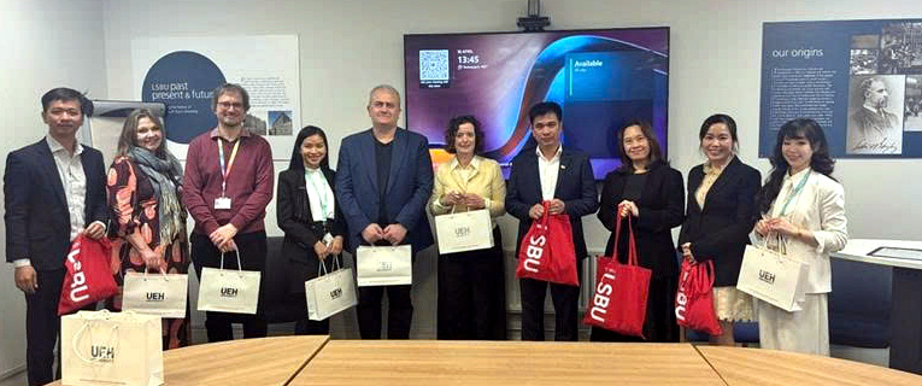
The project also brought together expertise from SIWRR in climate change and sustainable development and connected academics with Vietnamese industry through Sao Thai Duong Joint Stock Company, demonstrating how international university partnerships can create wider networks spanning research, education and practice.
Creating a platform for continued impact
A central aim of the final phase was to ensure that the project’s value would not end with the grant.
The infrastructure created through Empowering Change provides several pathways for continued impact. The interdisciplinary curriculum and teaching materials can be adapted for future academic and student cohorts; the research instruments provide a foundation for further research; and the Live Brief approach offers a replicable model for connecting sustainability education with real-world organisational challenges.
The project has also created an interdisciplinary network of female academics across natural and social science disciplines. These relationships provide a platform for continued collaboration in research, teaching and sustainability initiatives beyond the original group of 35 participants.
Together, these outputs demonstrate how a relatively focused capacity-building intervention can create wider and longer-term effects – strengthening individuals while simultaneously building research networks, institutional relationships and reusable educational resources.
A legacy beyond the grant
Academic dissemination will continue through journal publications and research networks. LSBU and UEH will use their strengthened institutional relationship and MOU to explore further collaborative research, education initiatives and international funding opportunities.
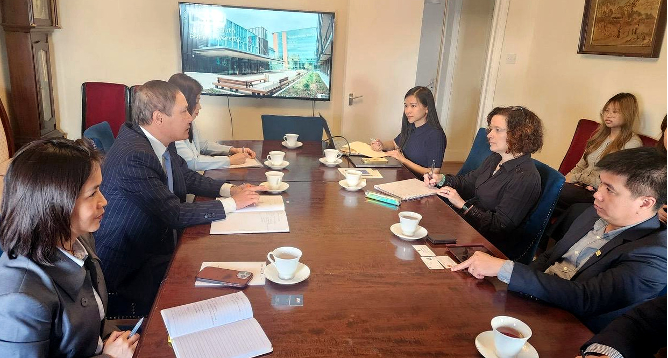
What started two years ago as an ambition to equip female academics with the knowledge and skills to engage more effectively with climate change and sustainable development has developed into something broader: an evidence base for change, a growing interdisciplinary academic network, new international research outputs and an institutional partnership positioned to continue creating impact.
