

This community-based, study investigated stroke awareness and knowledge of risk factors among ethnically minoritised adults in the London borough of Croydon. It also explored perceived barriers and facilitators to stroke prevention.
Why stroke awareness matters
Stroke incidence among younger individuals is rising globally. In the UK, this trend coincides with a growing ethnic minority population, who experience poorer outcomes.
Stroke is one of the leading causes of death and disability, but people’s understanding of its symptoms, causes and risk factors can vary between communities.
Stroke also affects some racial and ethnic minority communities disproportionately, with disparities in stroke risk and care well documented. Risk factors such as hypertension, obesity and diabetes can contribute to these inequalities, while hypertension is a major contributor to racial and ethnic disparities in health.
For people in Croydon, understanding what they know about stroke, what they have experienced and where there may be gaps in awareness can help build a clearer picture of the information and support they need. This was the starting point for research exploring how ethnic minority communities understand stroke, including its causes, warning signs and risk factors.
Listening to the community
The research team worked with Croydon BME Forum and the Asian Resource Centre of Croydon (ARCC) and public health Croydon.
Through focus groups, participants shared their understanding of stroke, including risks factors and stroke onset signs. A wider survey was also carried out as part of the mixed-methods study, to help the research team build a broader picture of the perceived barriers and facilitators to stroke prevention.
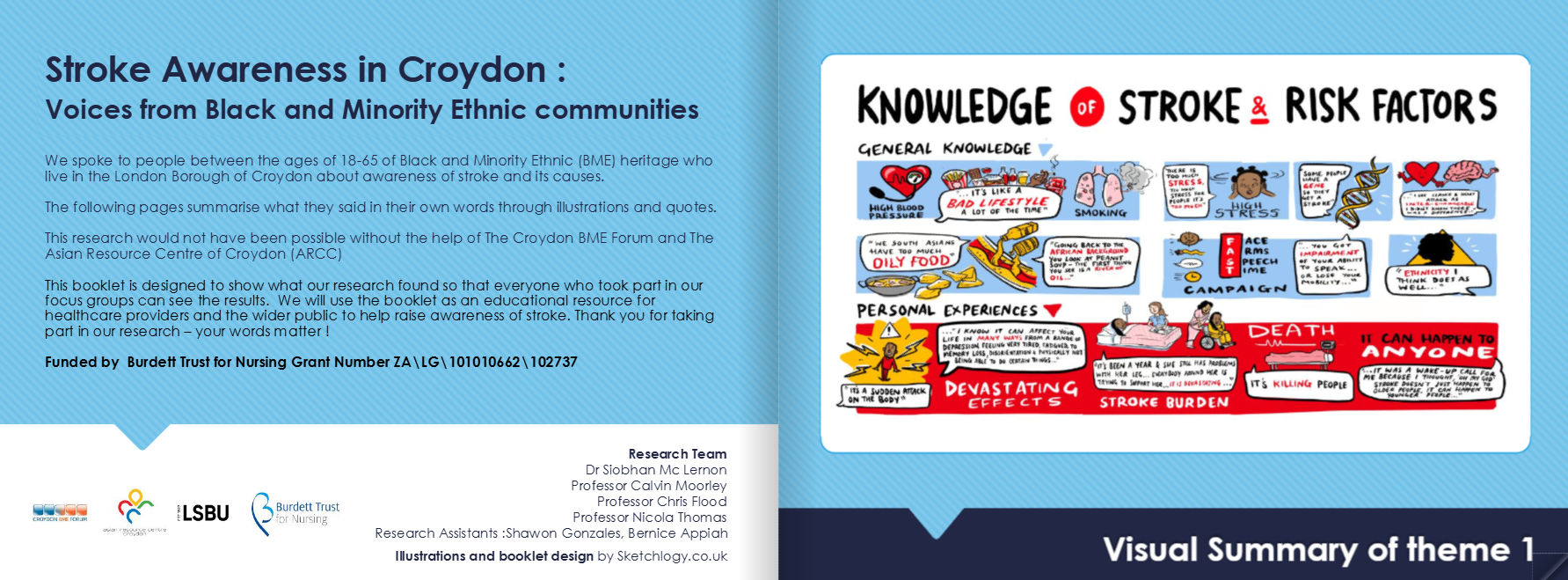
The research team used creative visual illustrations to make the findings more accessible. This approach was very well received by community members, during a dissemination event.
What we heard from the community
The findings showed that people were not always aware of the factors that can increase their risk of stroke, particularly those linked to ethnicity and women's health. This lack of awareness may make it more difficult for people to take steps to prevent a stroke.
The findings highlight the importance of making stroke education fair and inclusive, ensuring that everyone has access to clear, trustworthy information that respects their cultural backgrounds and individual needs. Using a range of communication methods, such as social media, videos, community events and face-to-face support, could help people better understand their risk of stroke, make healthier lifestyle choices and maintain positive changes to their health over time.
How the research was communicated to the community
The findings were brought together in a visual booklet designed to share the research with the communities involved. It presents participants’ perspectives through illustrations and direct quotes, helping make the findings easier to engage with and understand.
The booklet provides an accessible resource for healthcare providers, community organisations, health and wellbeing initiatives and others working to improve stroke awareness.
By placing participants’ voices at the centre of the findings, the research creates an opportunity for their experiences and perspectives to inform future approaches to stroke awareness and primary prevention in Croydon.
Read the stroke awareness booklet
Next steps
The research team is continuing to build on what was learned through the focus groups and wider survey. Several research publications were developed.
To continue building on Stroke Awareness research a Chancellor’s PhD Studentship was awarded to develop culturally sensitive Stroke Awareness interventions. This will involve listening to the community so that the remain part of the conversation around Stroke prevention.
Explore the research further: